
The Corbyn Paradox
I discuss Corbyn's new left-wing party, the disconnect between public grievances and political solutions, and whether a united front with the Green Party was a missed opportunity.

You’ve heard it, Jeremy Corbyn is back. Alongside fellow former Labour MP Zarah Sultana, he announced the launch of a new left-wing party. It doesn't have a name yet, but they would be sure to remind everyone that it does in fact exist. Sultana was so eager about the project she announced it ten minutes after a Zoom call where the loose outline of the party was agreed. Now the party is officially up and running.
In a joint statement announcing the venture, Corbyn and Sultana declared:
They went on to say:
“We will only fix these crises in our society with a mass redistribution of wealth and power”.
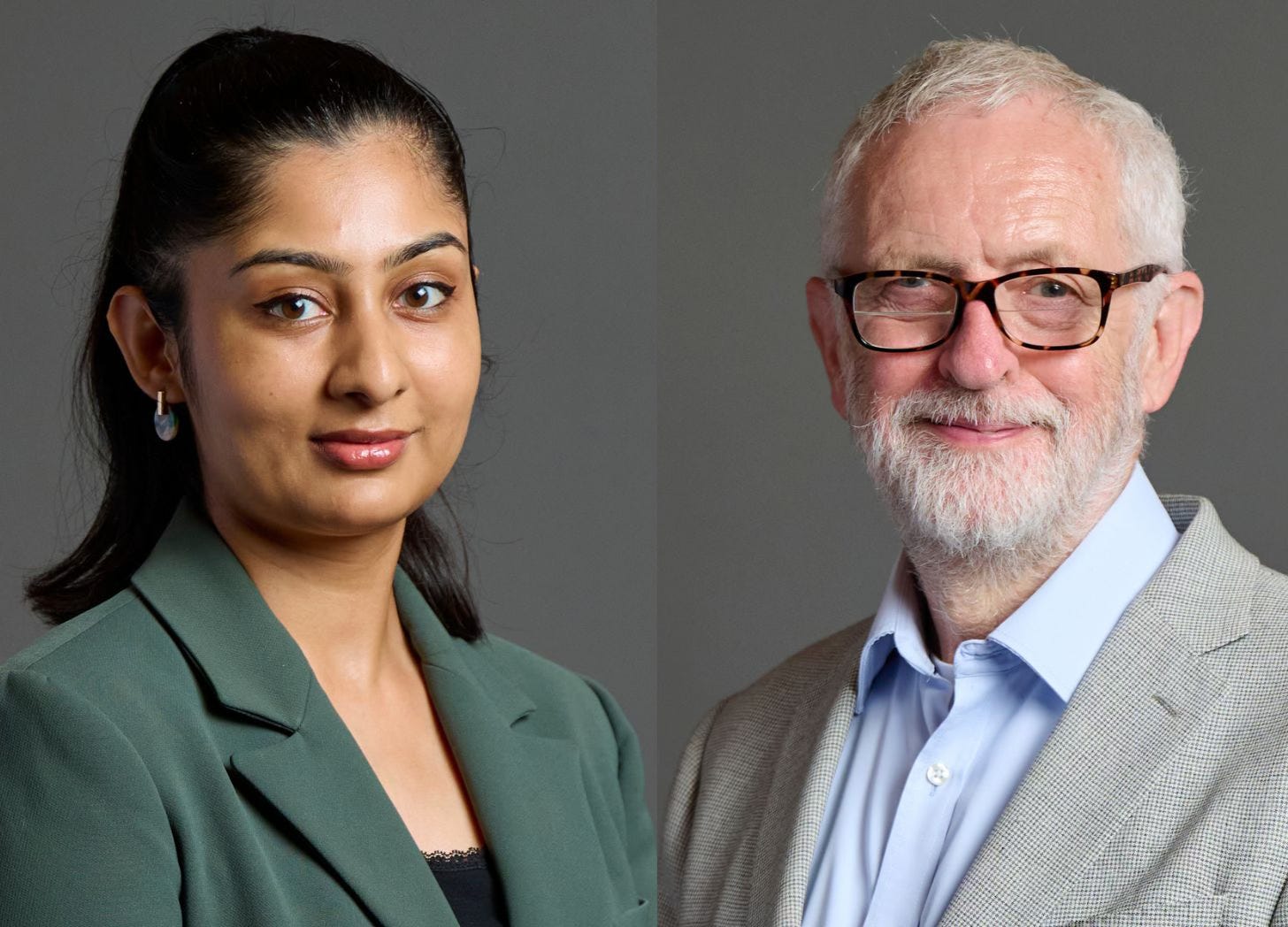
At first glance, the broad theme is exactly what one would expect from a Corbyn-led movement. It’s hard not to notice that space for such a movement has opened up on the left. Keir Starmer has governed in a manner far removed from his Labour leadership campaign promises - promises that were, of course, shaped in reaction to Corbyn’s tenure. From removing winter fuel payments from many pensioners to seeking deep cuts to disability benefits, Starmer appears to have undergone something of a Damascene conversion.
Starmer’s poor approval ratings demonstrate how many of those voters who backed him in 2024 may be looking elsewhere come the next election - perhaps to Corbyn or Reform, unless he and Reeves can begin to get the economy growing at a faster pace. But that could be a naive hope.
I feel there is far stronger discontent among young people too, who are more likely to agree with Corbyn’s prognosis that the system is rigged, making it no surprise his party is so popular amongst the youth. Why is it that they can work full-time jobs yet barely get by, struggle with groceries, and can only dream of buying a house — while the older generation, who mostly own their homes, enjoy subsidised energy bills and free bus passes? That disparity alone frustrates many young people.
And here’s the paradox. People are quick to complain about how unfair life is, yet just as quick to attack those who try to change it. Take the backlash over cutting winter fuel payments for millionaire pensioners. Many younger voters opposed the move, even as they insisted the system was “rigged” against them. There’s a deep inconsistency in our body politic - an inconsistency which breathes life into the political careers of populists, like Corbyn.
This inconsistency makes it even more intriguing to consider where disaffected Labour voters may turn. Could they gravitate toward Reform? Corbyn's popularity ratings are surprisingly, almost identical to Starmer’s. Farage, conversely, is more popular - and - less disliked than both. Yes, popularity ratings don’t always predict voting intention, but they’re a telling indicator. Although Corbyn polls well among younger voters, he and Sultana clearly have work to do to catch up with Reform, who would win the most seats were a general election held today. It is certainly a steep hill to climb if there ever were one.
One puzzling element of Corbyn and Sultana’s new party is why they wouldn’t simply throw their weight behind the Green Party. There is a Green leadership contest going on right now. Eco-populist Zack Polanski, who has driven party membership by at least eight percent, is in a strong position to replace Carla Denyer and Adrian Ramsay. Although, at this juncture, I do think we should all spare a thought for Adrian Ramsay who seems to be having a torrid time campaigning to keep his job - and struggled to say he even liked Polanski in a leadership debate hosted by LBC.
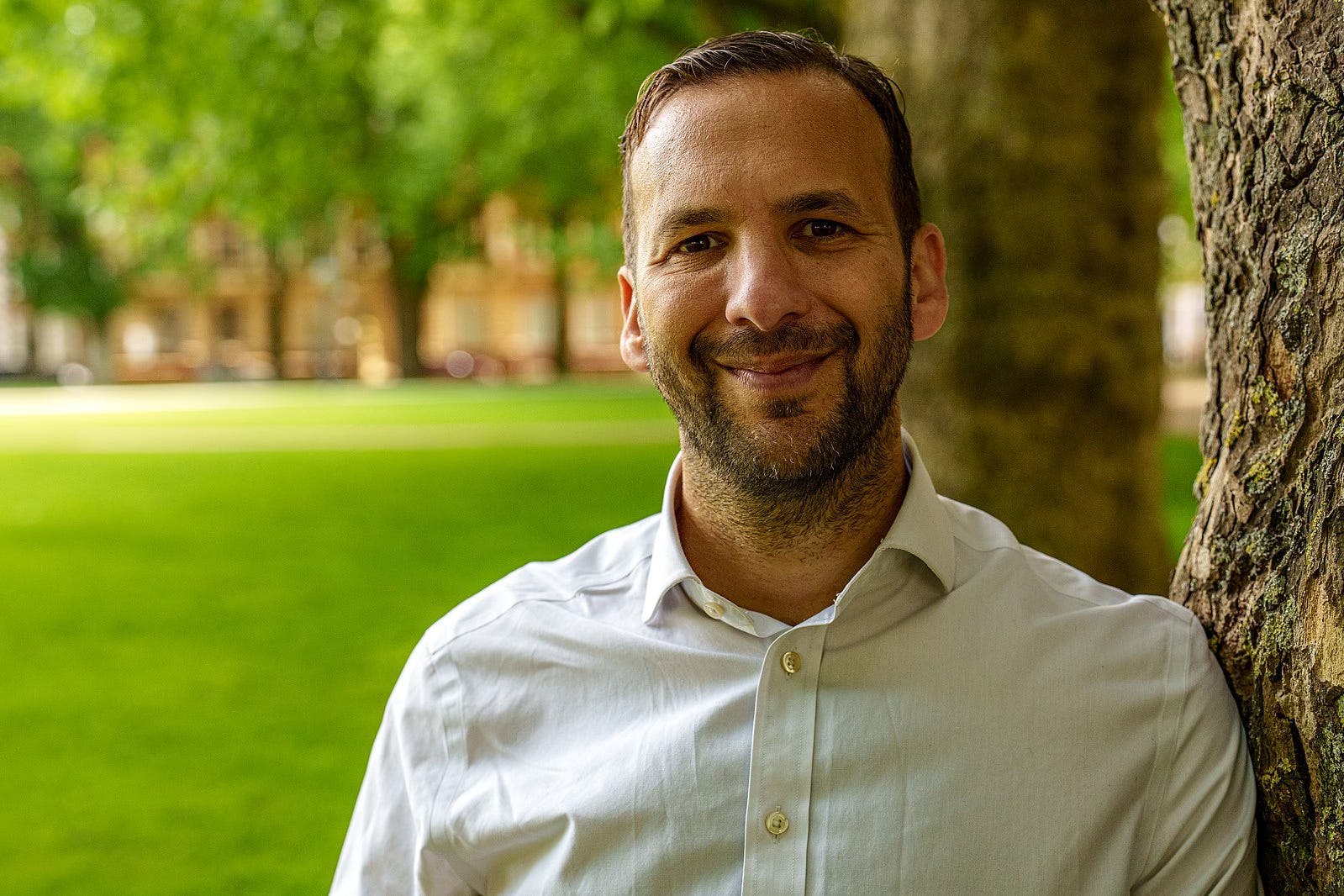
If you listen to what Polanski is campaigning for you couldn't help but question why Corbyn and Sultana wouldn't just get behind his bid. Surely a united left would be a more realistic vehicle for change? And the Green Party already is a well established political party off the back of their best general and local election results, so why would Corbyn and Sultana start from zero? Should Polanski win, he seems open to working with Corbyn. I can't help but think the left would stand more of a chance if it was united behind the more established Green Party, than splintered in this manner. Sultana and co must be banking on Corbyn’s sectional starpower to leapfrog the Greens. Maybe they don't think they need them? And with over 700,000 party sign ups, maybe they are right.
I do also want to highlight Corbyn’s unlikely return to party leadership. For even with Sultana sharing the load, it’s worth remembering Corbyn’s time as Labour leader. Whatever his merits or faults, he often gave the impression of a man who disliked the job. In their book Left Out, Gabriel Pogrund and Patrick Maguire do not portray a party leader who revels in the job - they even explicitly refer to his being unhappy, fed up and tired as leader, needing to take bedding into his parliamentary office to get sleep before late night votes. So why throw himself back into the leadership grind now, six years on, as a seventy six year old, when the Green option was there?
I’m genuinely conflicted about this new party. In principle, I agree that Britain’s wealth is unjustly distributed and that it is a disgrace for 4.5 million children to live in poverty. But I can’t shake the feeling that there were smarter routes to advance these goals - starting with a broader acknowledgment in our country of the inconsistency between the problems people face and the solutions they support. Backing a Polanski-led Green Party - with its credible ground game and established infrastructure, however modest compared to Labour’s - might have been the more tactical move, and also one Corbyn may find less personally terrifying.
That said, it will be interesting to see how this party develops. Shifting the political conversation away from Farage’s territory and toward a fairer economic vision would be a welcome change — but if it ends up wounding the centre from the left, while Farage is already attacking it from the right, it could make Farage’s path to Number 10 far easier. Only time will tell. But in trying to fix the system they say is rigged, they may only end up helping the man who has exploited it best.